After working on Meta, I connected with Shiz Aoki from BioRender, a Y Combinator-backed startup. Shiz spent a decade as Lead Medical Illustrator at National Geographic before founding BioRender in 2017 to help scientists make their own professional figures.
Researchers loved BioRender’s beta, but the editor interface lacked consistency. The development team shipped features fast, and each new toolbar or modal added friction for users and slowed the developers down.
My role: build a design system, improve the interface with the front-end team, and onboard a full-time product designer to own the work long-term.
Research findings
Working with a user researcher, we interviewed high-value users and ranked their needs:
- Browse over 20,000 icons via search and category navigation
- Choose from pre-made templates or start from scratch
- Request new icons when the library falls short
- Create scientific diagrams with drag-and-drop
- Update figures over time as research evolves
- Export to multiple formats for publications, presentations, and web
- Use pre-set color palettes based on scientific conventions
- Share illustrations across a lab, team, or organization
Prototyping the interface

We audited and redesigned the tools and icons for a consistent interface.
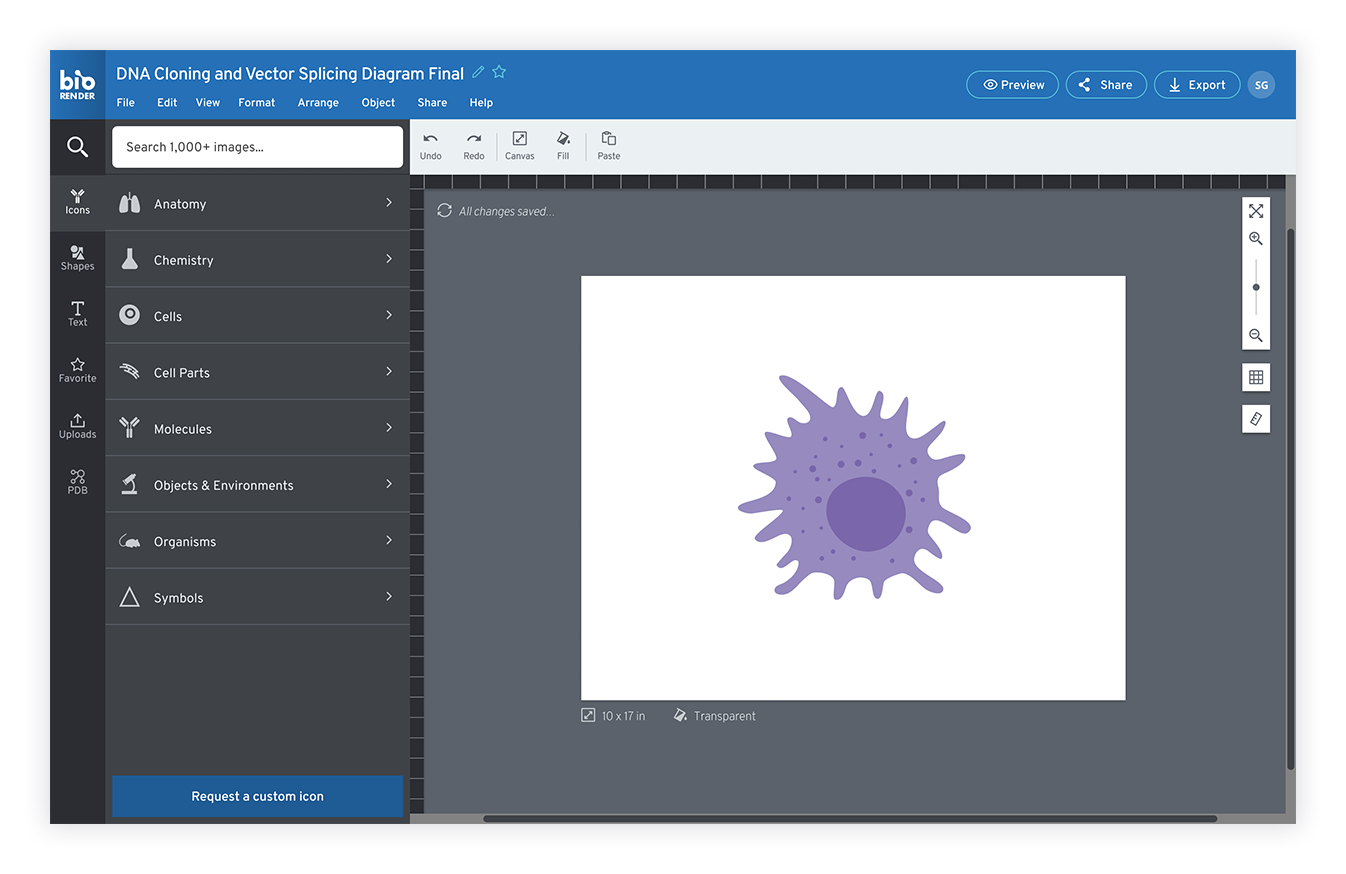
Redesigned pane navigation supports multi-level browsing, improved search, drag-and-drop, and a darker canvas.

Redesigned toolbars house secondary actions in context menus on selected elements.

Hover previews let users scan and drop visuals onto the canvas without extra clicks.
Outcome
More than 4 million researchers have used BioRender to create over 25 million scientific figures. In December 2025, BioRender announced new funding at a $900 million valuation.